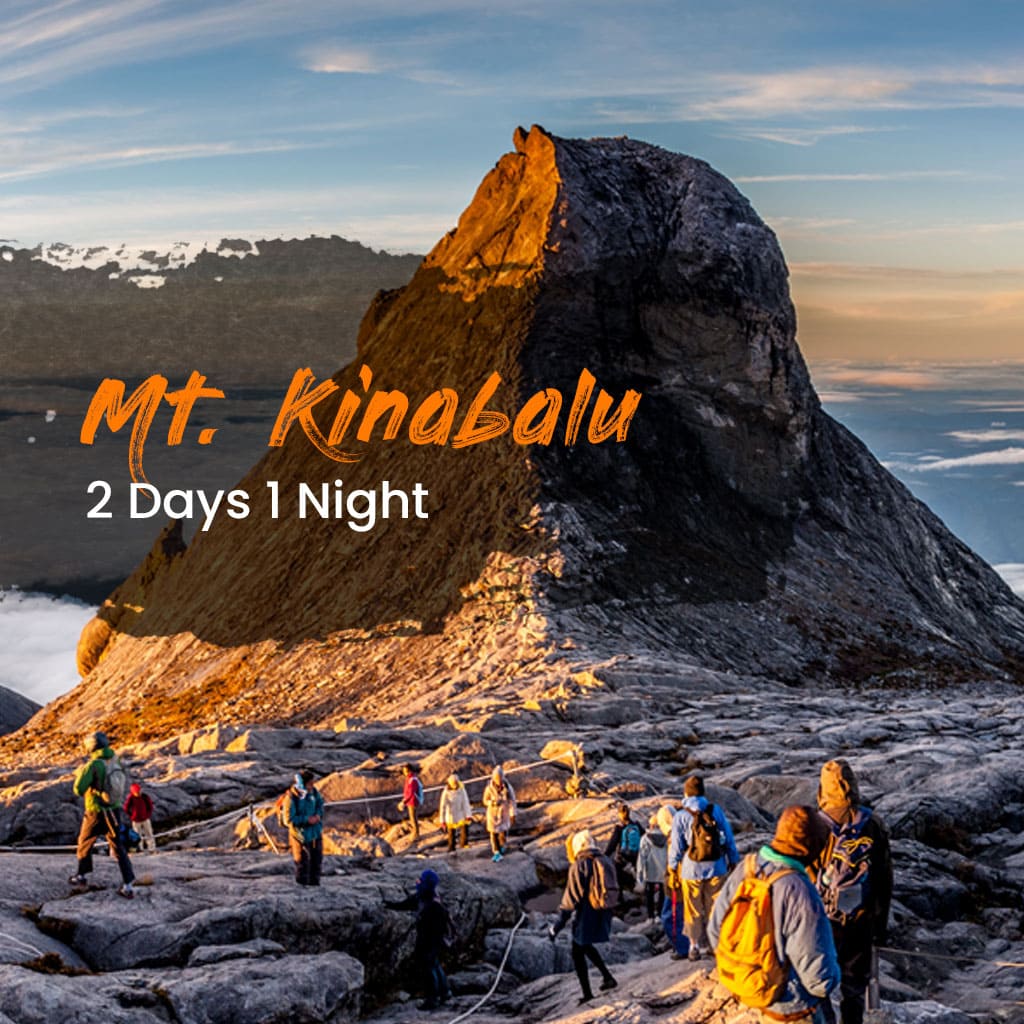
Reaching the summit of Mount Kinabalu just before sunrise rewards climbers with one of the most spectacular views in Southeast Asia — a sea of clouds below, the granite summit plateau around you, and the sky shifting through colour as the sun rises. Capturing this moment well takes a little preparation, both for your gear and for the conditions you will be shooting in.
Preparing Your Gear for Cold and Wind
Temperatures at the summit before sunrise commonly sit between 2 and 10 degrees Celsius, often with strong wind. Cold temperatures significantly reduce battery life, so carry spare batteries in an inner pocket close to your body where they stay warmer. If using a phone, consider keeping it in a warm pocket between shots rather than holding it exposed for long periods.
Keep Your Camera Accessible
During the final summit push in the dark, your hands will likely be occupied with trekking poles and navigating uneven terrain using your headlamp. Rather than packing your camera away, keep it in an easily accessible pocket or a small chest harness pouch, so you are not fumbling at the critical moment when the light starts to change.
Shooting in Low Light Before Sunrise
The period before the sun actually appears — often called the blue hour — can produce some of the most striking images, with deep blue skies transitioning to soft pink and orange near the horizon. If your camera allows manual settings, a slightly longer exposure (without a tripod, brace against a rock or your knee to minimise shake) can capture more detail in this low light than an automatic setting might.
Composing With the Summit Plateau
One of the features that makes Kinabalu’s summit photographs distinctive is the dramatic granite landscape itself — smooth rock faces, dramatic shadows, and other climbers silhouetted against the sky as they make their way to Low’s Peak. Including some of this foreground interest, rather than shooting the sunrise alone against an empty sky, often produces a more memorable image that captures the scale and atmosphere of the summit.
The Sea of Clouds
On clear mornings, the view below the summit is often a vast layer of cloud stretching across the landscape, with only distant peaks breaking through. This “sea of clouds” effect is one of the most sought-after shots on Kinabalu — try shooting both wide-angle views to capture the scale, and tighter compositions focusing on individual cloud formations catching the early light.
Photographing Fellow Climbers
Some of the most evocative images from Kinabalu summits are not landscapes at all, but the climbers themselves — silhouettes against the sunrise, exhausted but joyful expressions at the summit marker, or the long line of headlamps still visible on the trail below in the pre-dawn darkness. These human moments often tell the story of the climb as effectively as the scenery itself.
Don’t Forget to Put the Camera Down
It is worth saying directly: the temptation to spend the entire sunrise looking through a viewfinder is real, but many climbers who have done the trip multiple times say their favourite memories are the moments they simply watched. Take your shots, but also build in time to experience the sunrise without a screen between you and the view — you have earned it after the climb to get there.
Practical Checklist
- Spare batteries kept warm in an inner pocket
- Camera or phone easily accessible without removing gloves for too long
- Lens cloth to wipe away condensation, which is common in the cold, humid conditions
- A small dry bag or pouch to protect your camera if conditions are misty or drizzly
Final Thoughts
The sunrise from Mount Kinabalu’s summit is genuinely one of those experiences that photographs well almost regardless of skill level — the scenery does much of the work. With a little preparation for the cold, an accessible camera, and a willingness to experiment with both landscape and human moments, you will come away with images that capture not just the view, but the feeling of having reached the roof of Borneo.